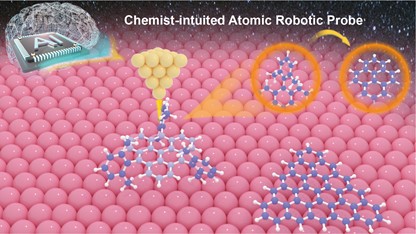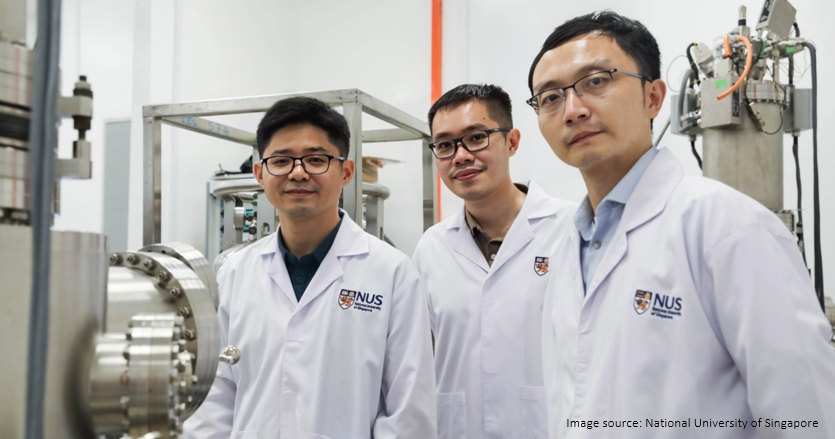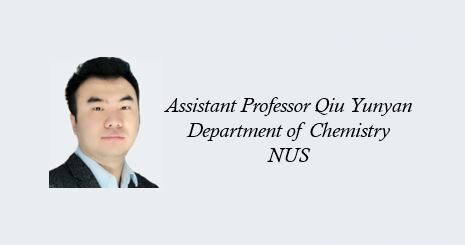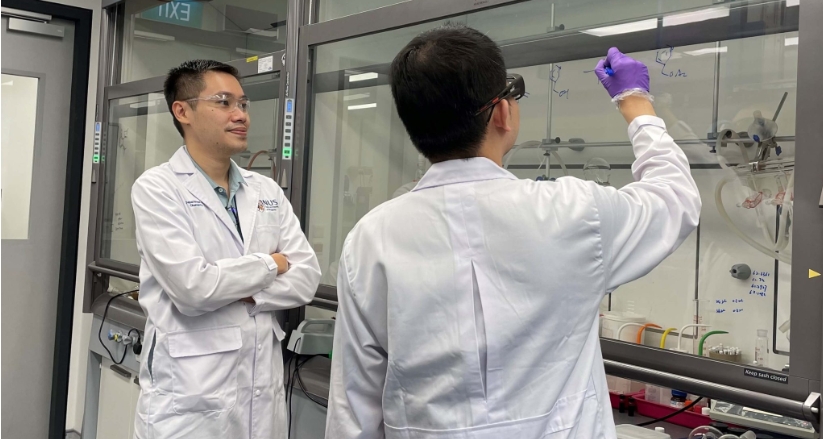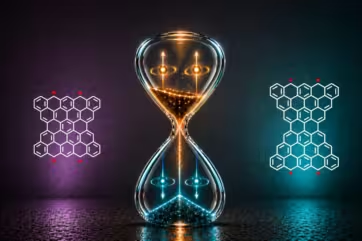
The research team was led by Professor LU Jiong from the NUS Department of Chemistry and the NUS Institute for Functional Intelligent Materials, together with Professor WU Jishan from the NUS Department of Chemistry, and international collaborators, including key contributor Professor Pavel JELÍNEK from the Czech Academy of Sciences in Prague have developed a predictive design strategy for creating graphene-like molecules with multiple interacting spins and enhanced resilience to magnetic perturbations, opening new avenues for molecular-scale quantum information technologies and next-generation spintronics.
The research breakthrough was published in the journal Nature Synthesis.
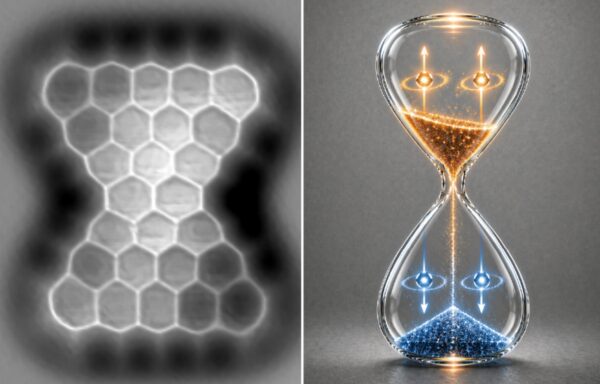
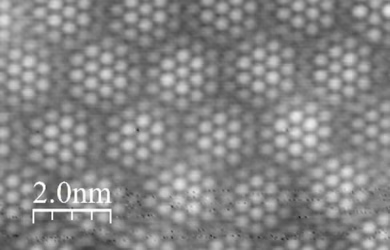
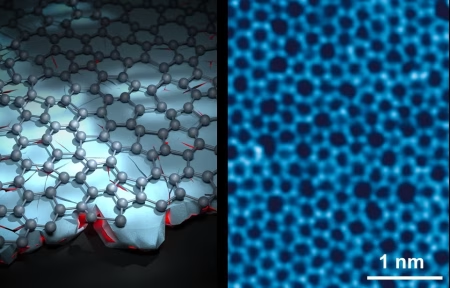
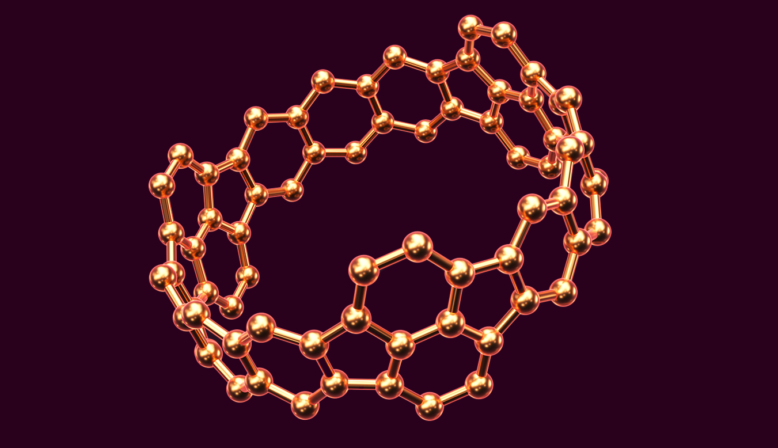
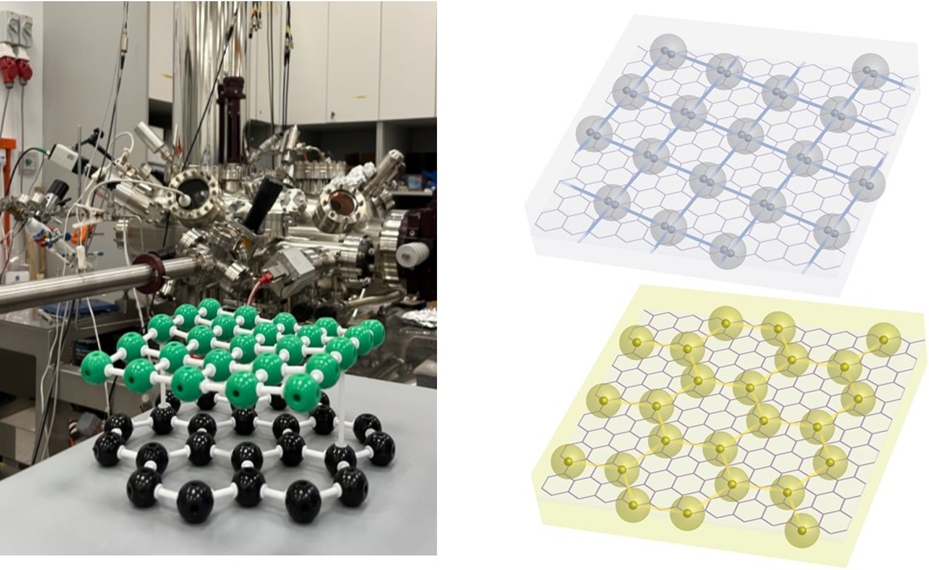
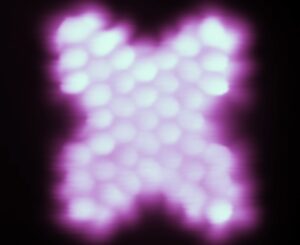
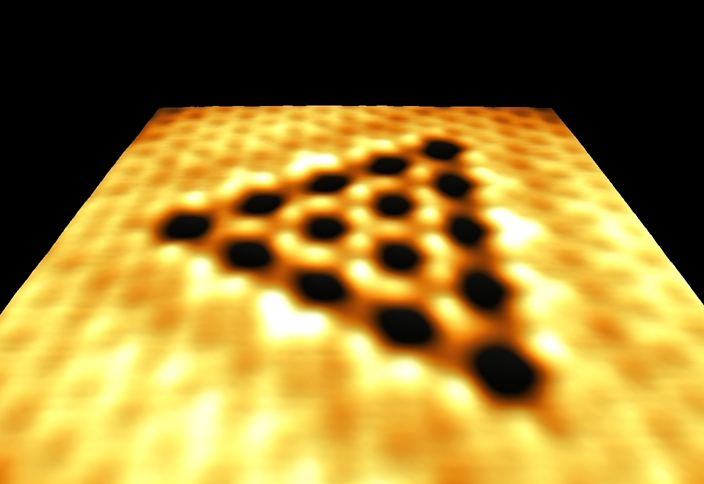
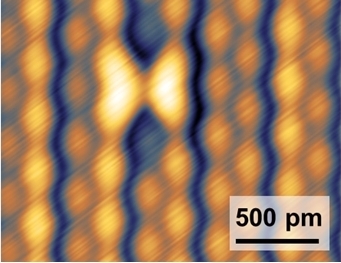
(Left) Non-contact atomic force microscopy image showing the honeycomb-like carbon framework of a nanographene molecule. (Right) A schematic illustration of the hourglass-shaped molecule, with four interacting spins represented by arrows at its corners. [Credit: Nature Synthesis]
Professor Lu said, “Our work establishes a clear structure–property relationship in hourglass-shaped nanographenes through combined experimental and theoretical investigations. These advances offer unprecedented control over the magnetic properties of molecular materials, opening new possibilities for molecular qubits and quantum simulators based on carbon platforms.”
The research team also compared the magnetic resilience of the two tetraradical molecules using scanning probe microscopy measurements with a magnetic sensor. Although both molecules contain four strongly correlated spins, they behaved differently under external magnetic perturbations. One molecule showed much stronger resilience, meaning its quantum state was harder to disrupt during measurement. This robustness is especially important for applications such as molecular qubits, where preserving fragile quantum states is essential.
“Looking ahead, we aim to probe spin dynamics and coherence times at the single-molecule level, and to achieve coherent control of these entangled spins. This marks an important step towards the development of molecular qubits and spintronic nanodevices,” added Professor Lu. Read the full article here.