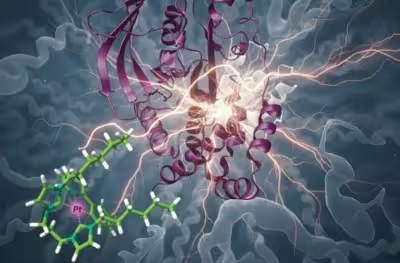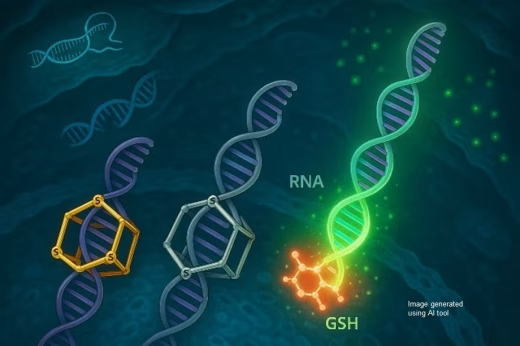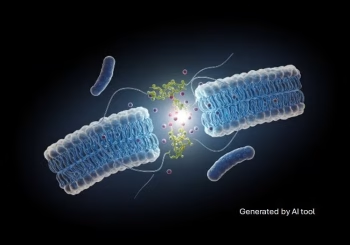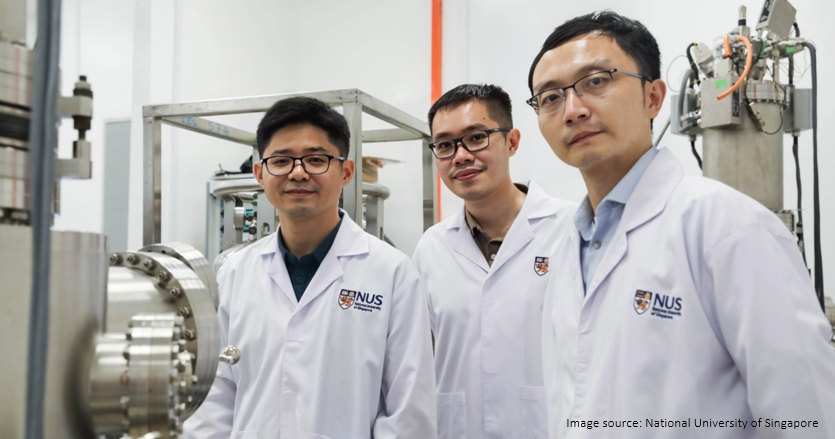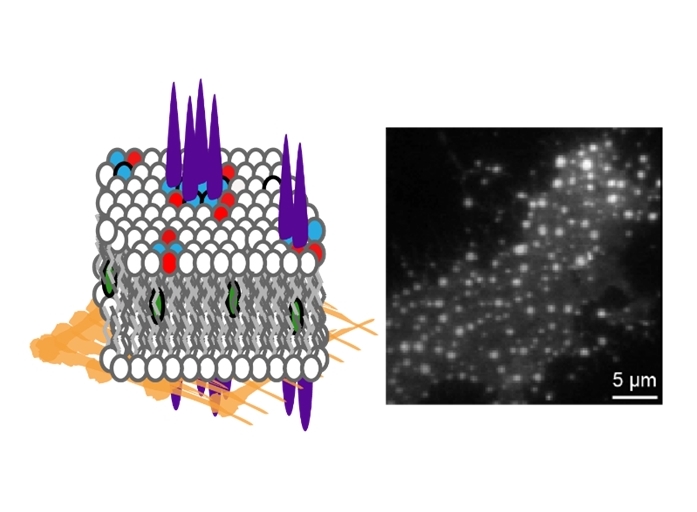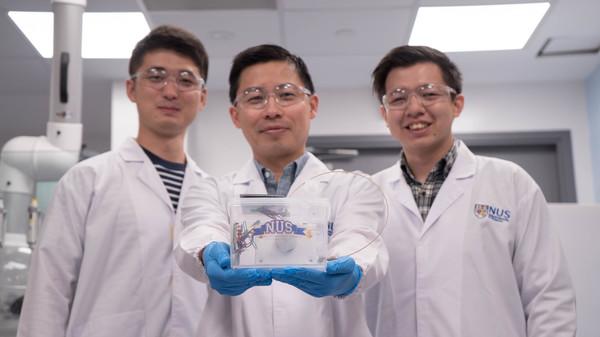
The NUS team, led by Professor LIU Xiaogang from the Department of Chemistry, NUS and Professor YAN Jie from the Department of Physics, NUS have built a molecular “leash” to pull directly on a force-sensing protein called Piezo1, and discovered it switches on at about 15 piconewtons, proving that it can be activated by physical tethers, not only by membrane deformation.
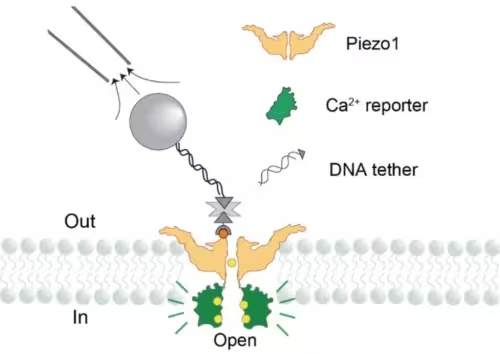
The team developed a new method to directly measure how tiny mechanical forces activate a key protein in our cells, known as Piezo1, a sensor that allows cells to “feel” physical forces. Using a DNA-based approach, the team was able to apply extremely small, well-controlled forces on the order of trillionths of a newton to individual Piezo1 channels. At the same time, they monitored the channel’s activity in real time using a fluorescent signal that lights up when calcium ions enter the cell. Their key finding: Piezo1 can be switched on by a force of about 15 piconewtons, providing the first precise measurement of the force needed to activate this important sensor.
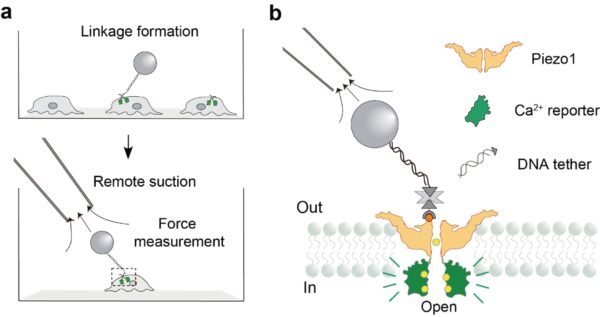
Figure (a) shows the formation of a DNA tether between the bead and the engineered Piezo1 channel, along with the remote suction setup used to apply force. Figure (b) illustrates the design of the engineered Piezo1 construct and the DNA-based force transduction system. A calcium ion (Ca2+) reporter is fused to the C-terminus to monitor channel activity via fluorescence, while DNA-coated beads are attached to the channel to enable targeted mechanical stimulation. [Credit: Nature Sensors]
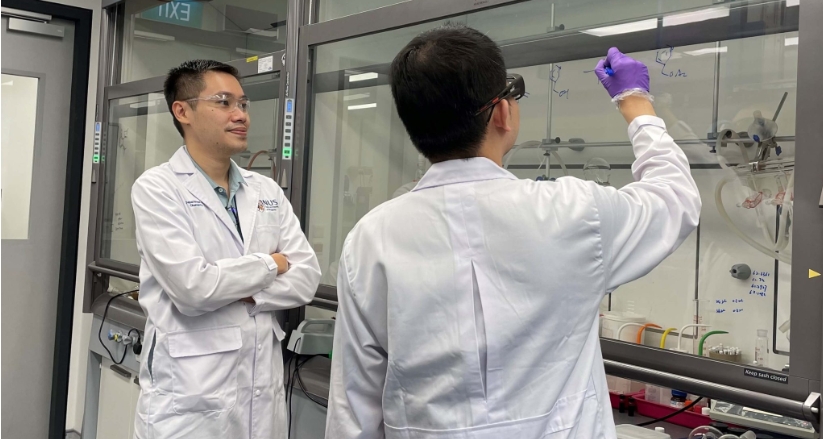
Dr SUI Mingyu, who is part of the research team said, “This work represents both a fundamental and technological advance in mechanobiology. By establishing a clear and quantitative link between applied force and ion channel activation while separating this effect from changes in the cell membrane, this approach opens up new ways to study the response of cells to physical forces in both health and disease.”
Read the full article here.