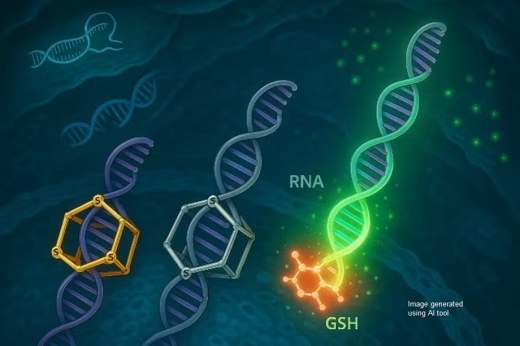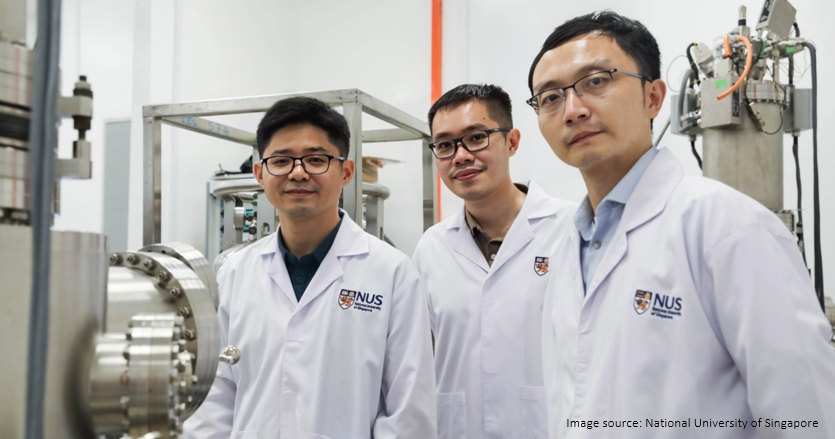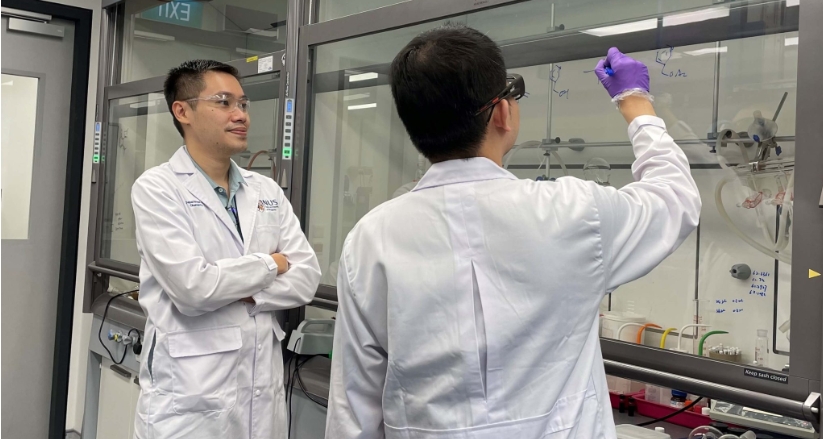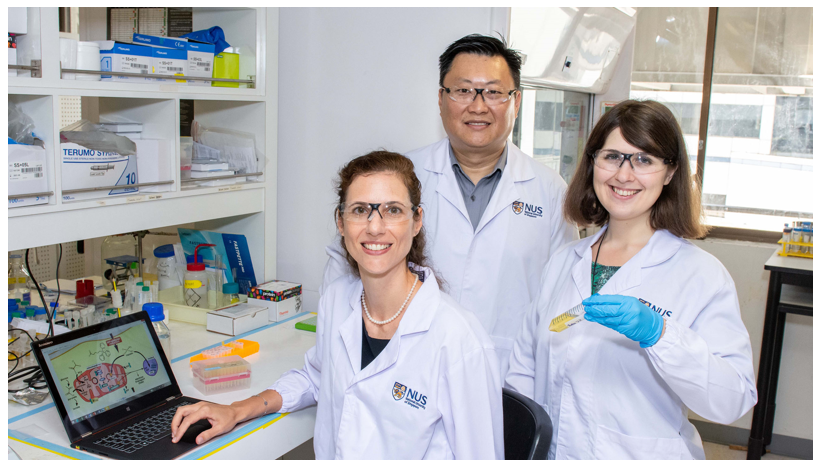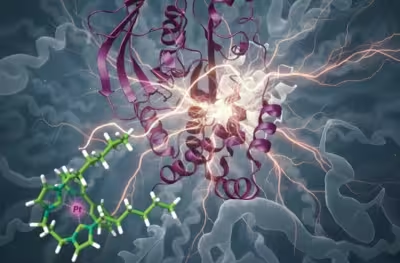
A research team led by Professor ANG Wee Han from the NUS Department of Chemistry has identified a protein called tyrosine phosphatase 1B (PTP1B) as a potential “switch” that can modulate a type of cancer cell death known as immunogenic cell death (ICD). In their research model study, tumour cells treated with these compounds were effective in helping to develop immunity protection against colorectal cancer. This work was carried out in collaboration with Associate Professor Maria BABAK from the City University of Hong Kong. The research breakthrough was published in the Journal of the American Chemical Society.
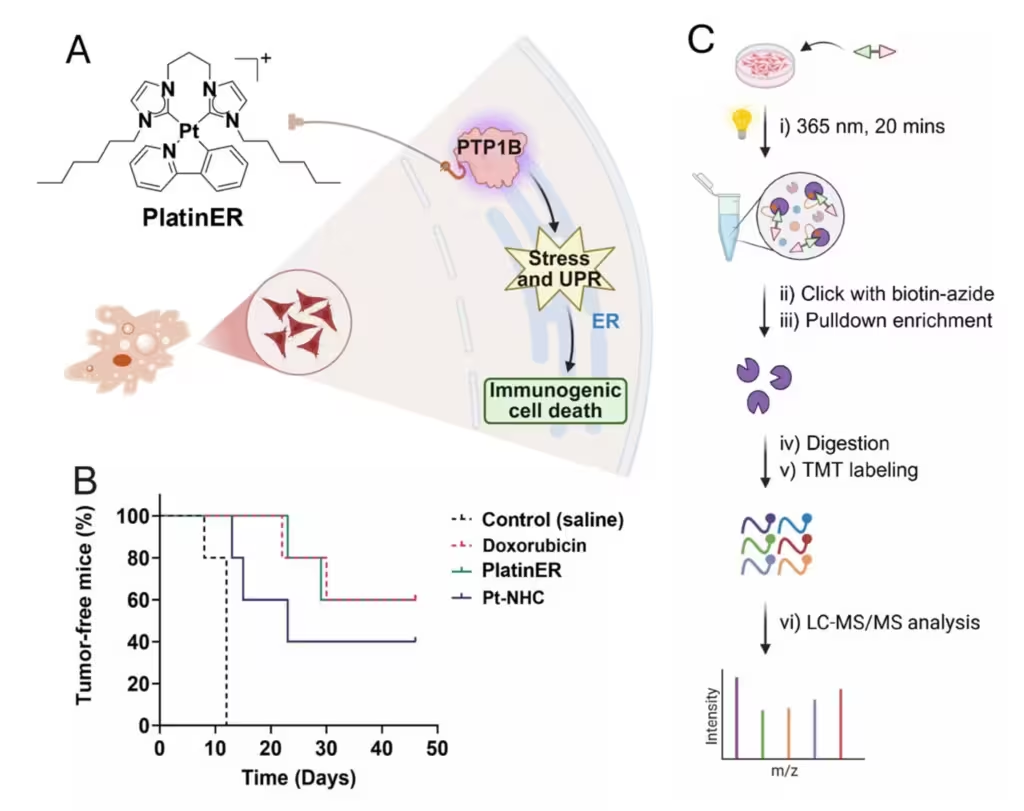
Figure (A) Mechanistic view of PlatinER induced ICD through PTP1B targeting. (B) Data illustrating ability of PlatinER and Pt-NHC to establish immunity against colorectal cancer in research models. (C) Schematic diagram illustrating target profiling processes, including photoaffinity labeling, click reaction, enrichment, tandem mass tags (TMT) quantitative proteomic analysis and target prioritization.
Overall, the study revealed for the first time that PTP1B plays an important role in regulating ICD and may be a promising target for cancer chemoimmunotherapy. Prof Ang said, “The current study revealed the link between PTP1B and the immune-stimulating effects of our platinum-based ICD inducers. The next step is to understand how these molecules interact with PTP1B and trigger cell responses. Moving forward, we plan to follow-up with a more detailed structural and molecular dynamics study of PlatinER with PTP1B.” Read the full article here.