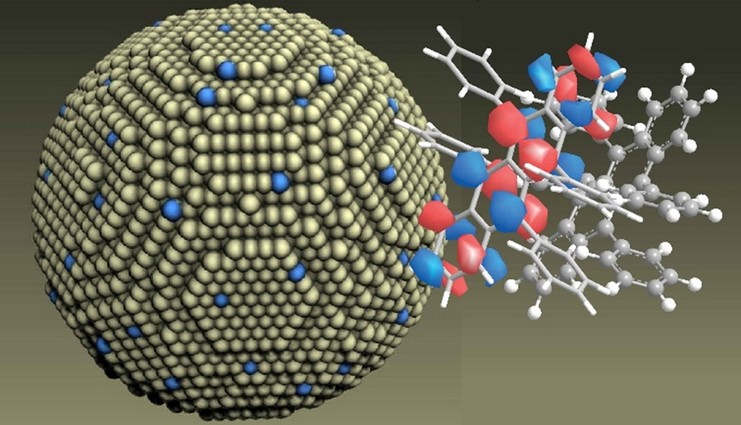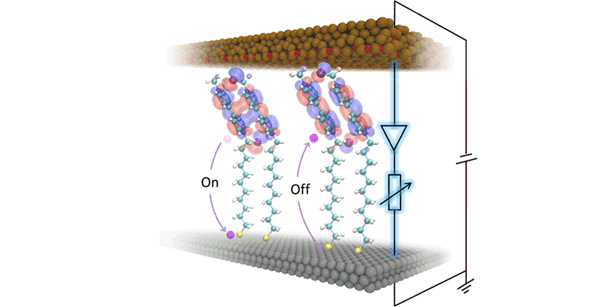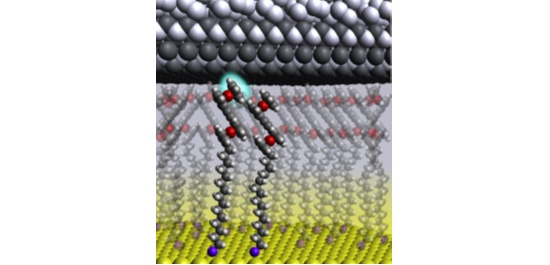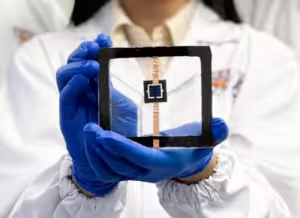
A research team from NUS has found a way to make these tandem solar cells last longer, even under high temperatures. The researchers discovered that a thin molecular layer used to connect the perovskite and silicon layers tends to degrade under heat, resulting in performance losses over time.
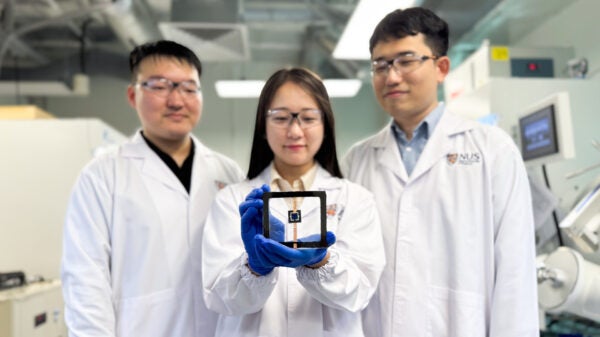
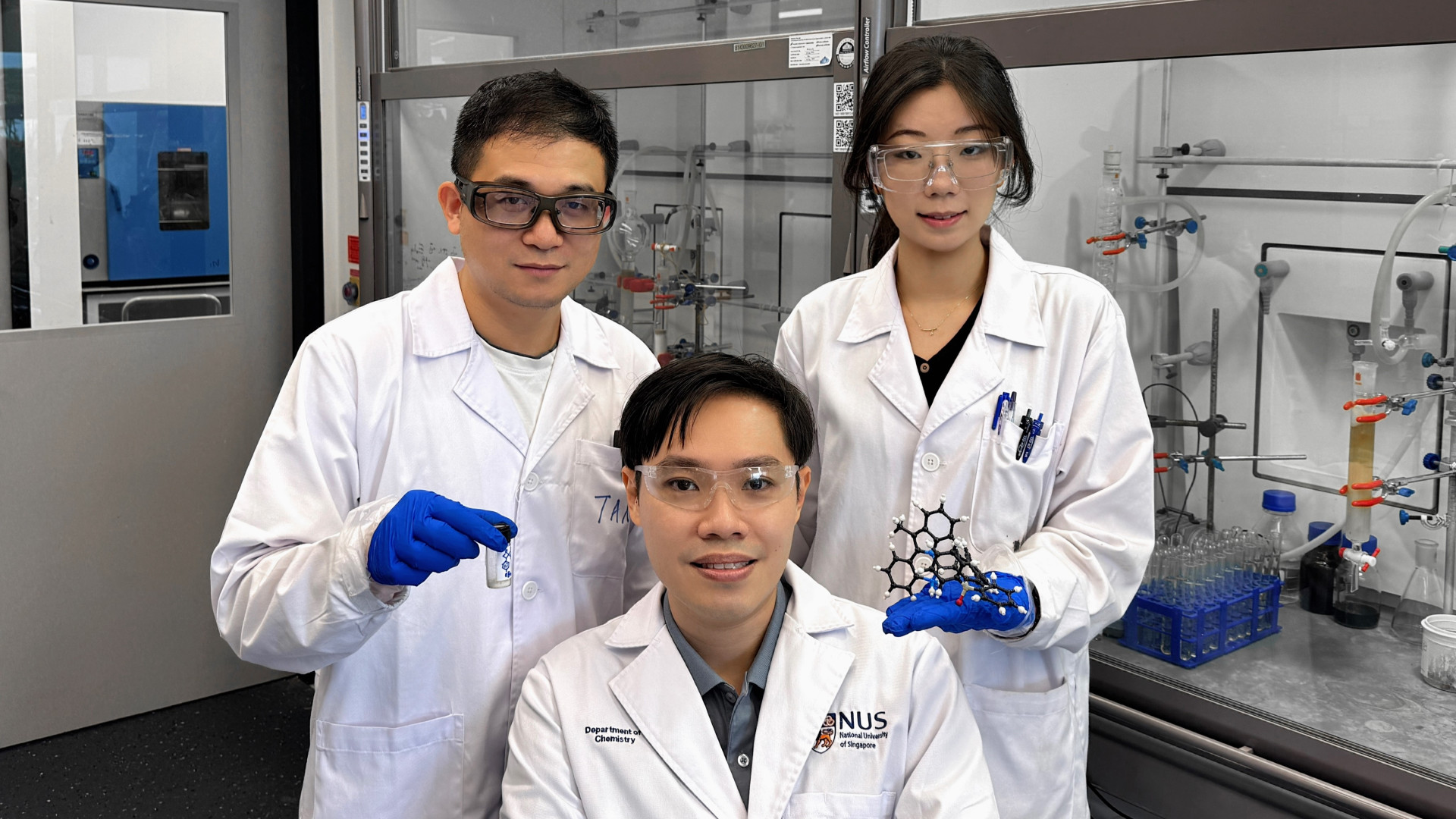
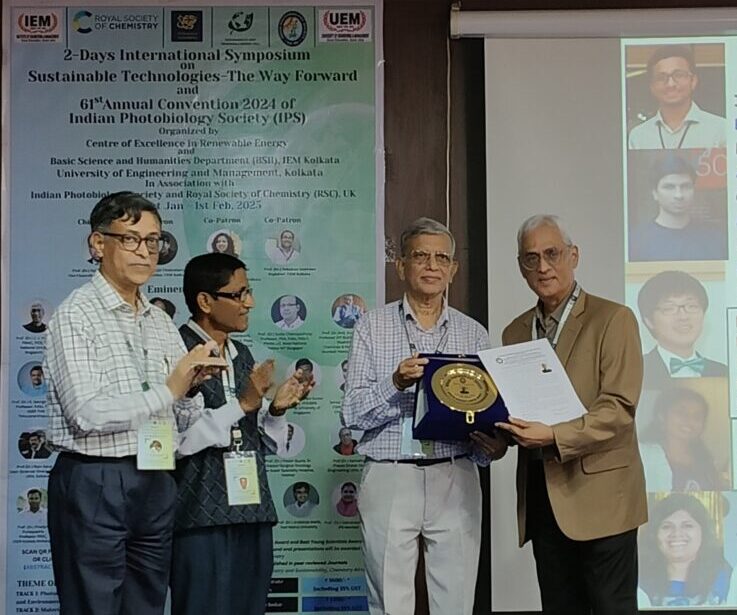
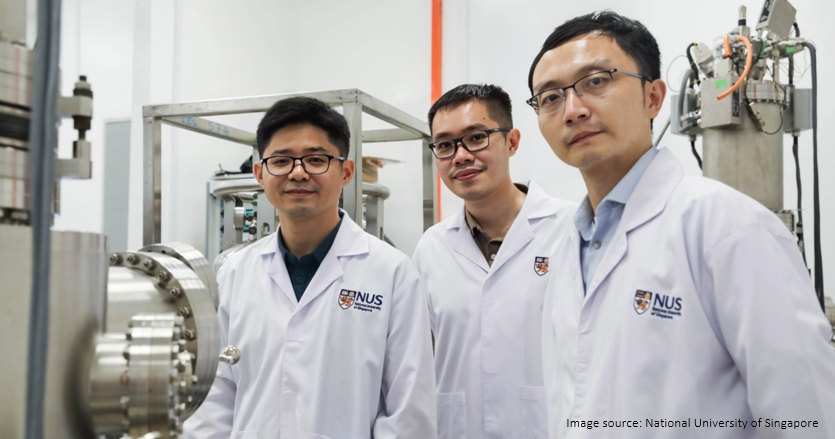
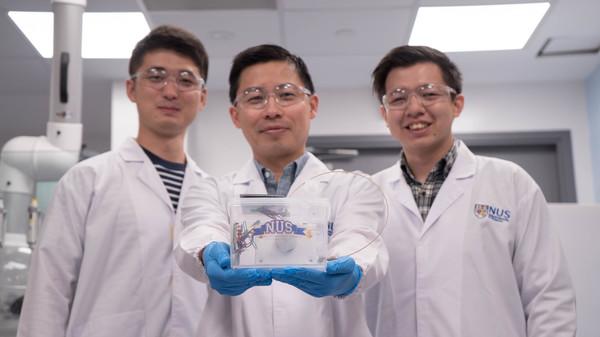
NUS researchers Dr ZHANG Boxue (left), Assistant Professor PARK Somin (middle) and Assistant Professor WEI Mingyang (right) developed a heat-resistant material to enhance the stability of perovskite/silicon tandem solar cells.
Armed with this insight, they designed a new heat-resistant version that holds the layers together more firmly, allowing the cells to maintain almost all their performance even after 1,200 hours of continuous operation at 65 deg C. Long-term stability is critical for commercial viability, as most silicon solar panels today come with warranties of 20 to 25 years. Matching that reliability has been one of the most difficult hurdles for next-generation tandem designs.
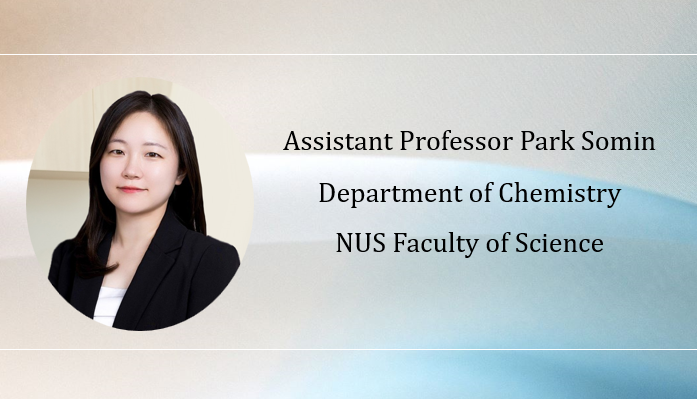
“Perovskite-silicon tandem cells can produce more electricity than traditional panels, but to be commercially viable, they must stay stable in real-world conditions,” said Assistant Professor Park Somin from the Department of Chemistry in the NUS Faculty of Science, who led the study. “We focused on strengthening the weakest link — the ultra-thin molecular layer between the two materials.” The team’s findings were published in the journal Science. Read the full article here.