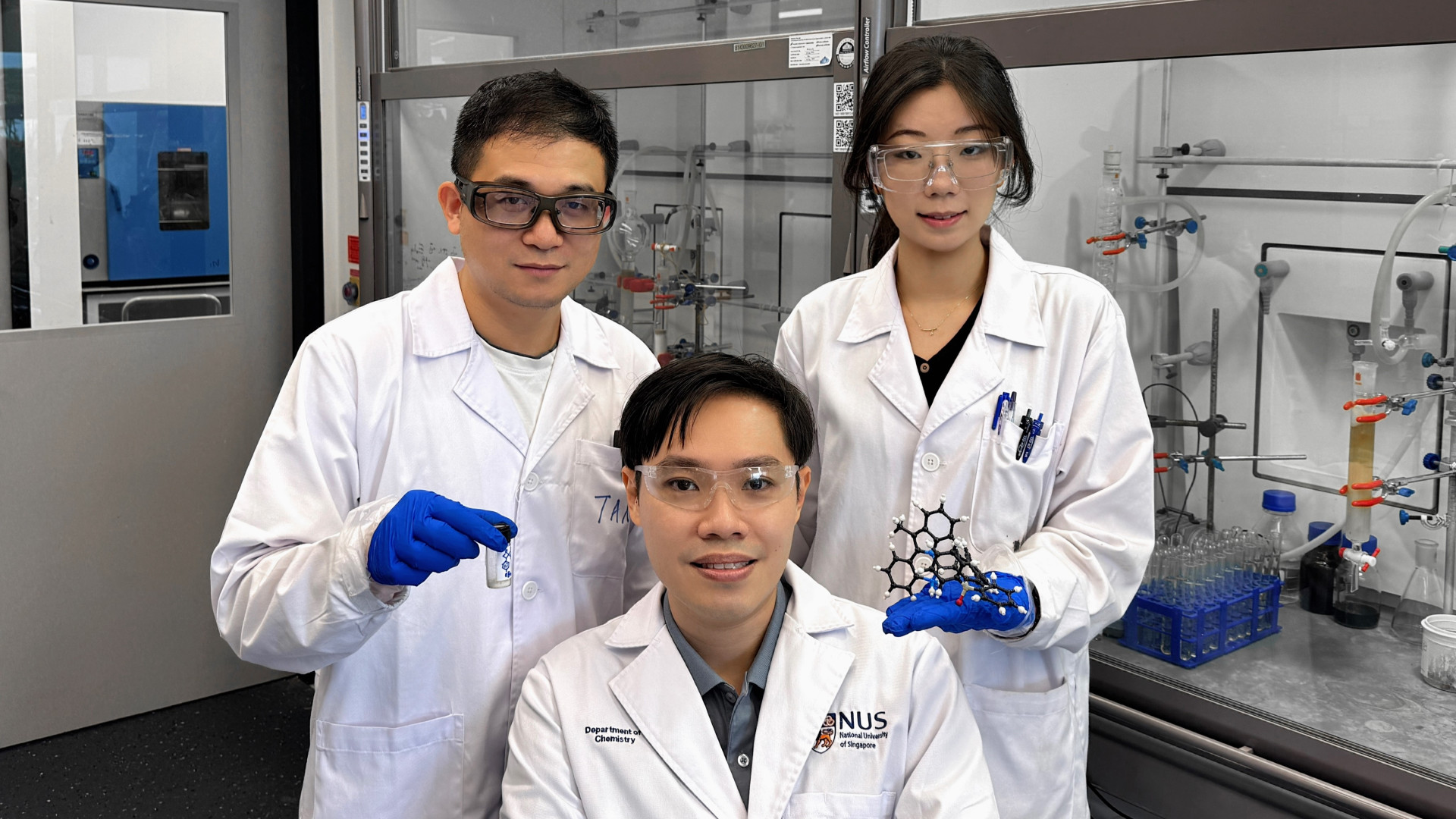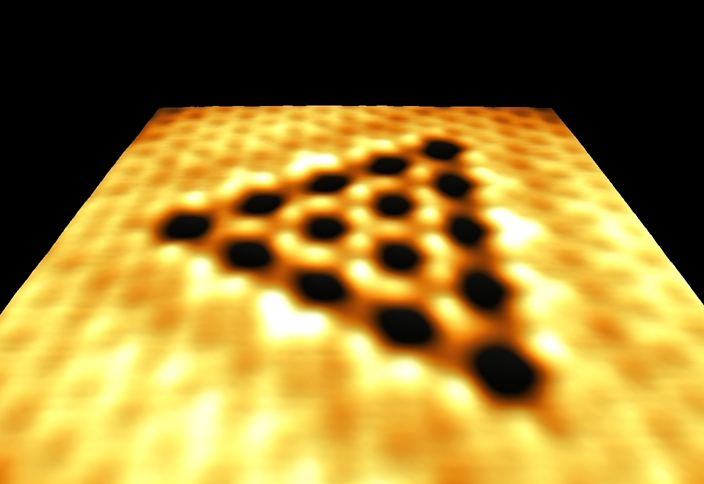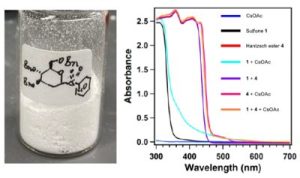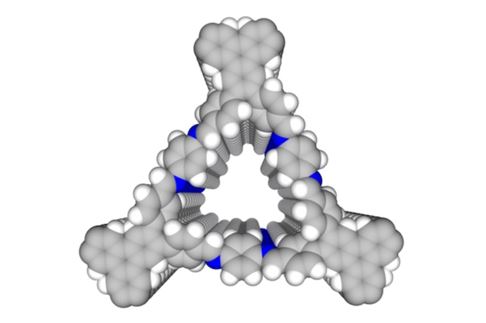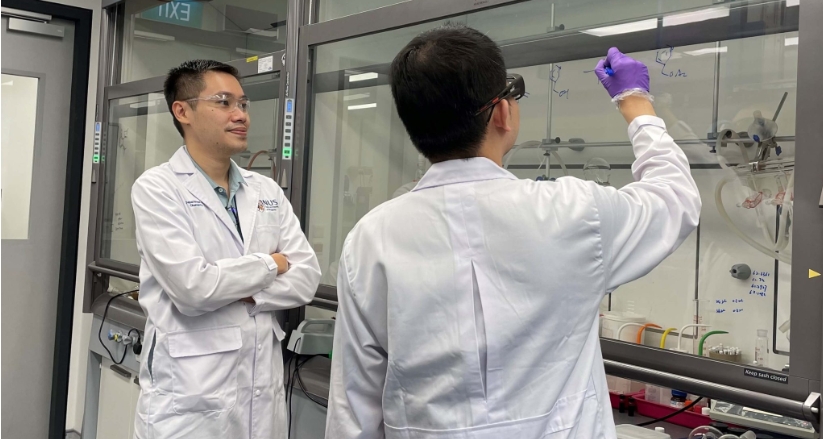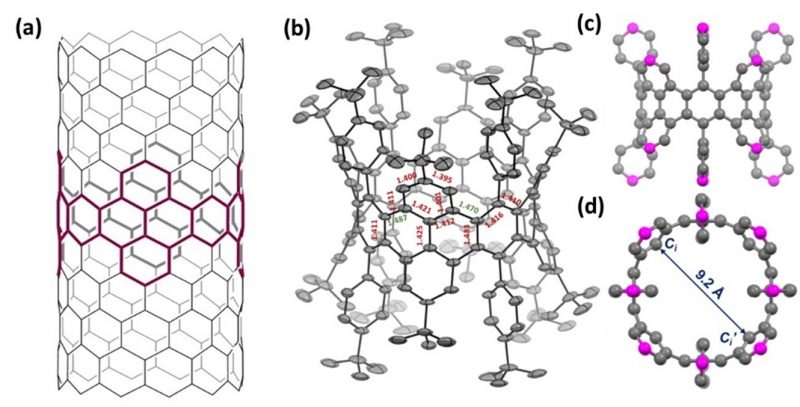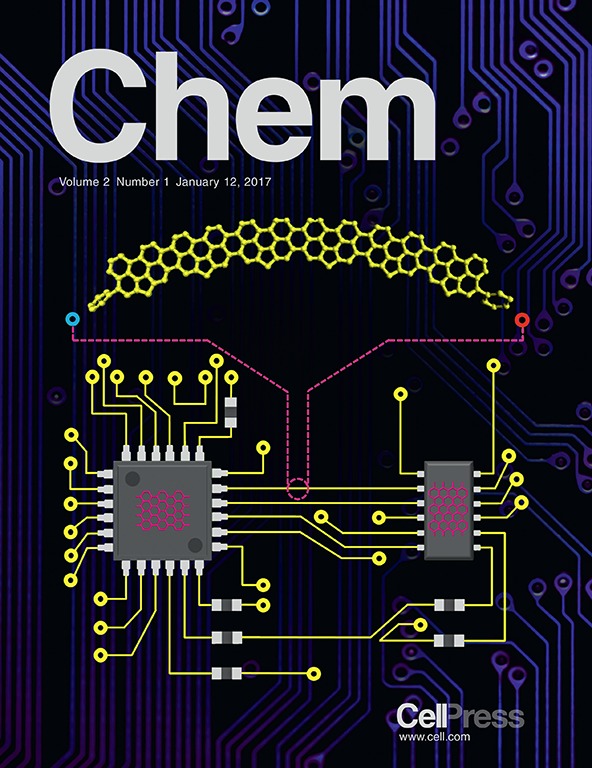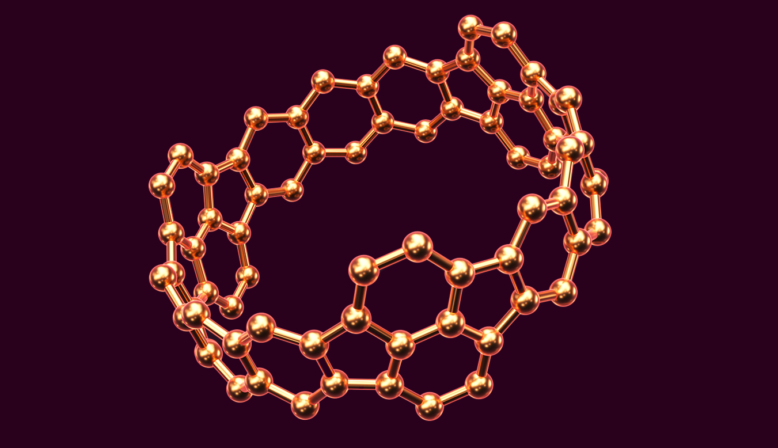
The research team led Associate Professor CHI Chunyan from NUS Chemistry developed a new class of fully π-conjugated, non-alternant pentagon-embedded CNBs that allows better electronic properties through deoxygenative aromatisation approach, a chemical process that forms aromatic rings by removing oxygen atoms from oxygenated precursors. In this strategy, oxo-bridged belt precursors are synthesised via a Diels–Alder reaction between benzyne and furan derivatives. These intermediates are then subjected to reductive aromatisation using tin(II) chloride (SnCl₂) and hydrobromic acid (HBr), affording two fully π-conjugated carbon nanobelts of different sizes. The stepwise buildup of strain energy, together with the moderate overall strain in the final structures, accounts for the successful formation of both nanobelts—long-standing targets in synthetic chemistry.
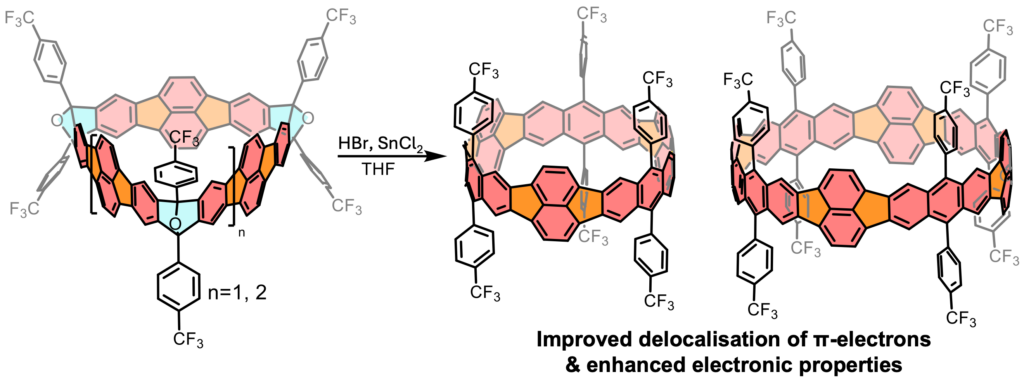 |
| The synthetic strategy developed in this work enables the gradual buildup of strain while maintaining effective π-conjugation, ultimately allowing access to the target CNBs. |