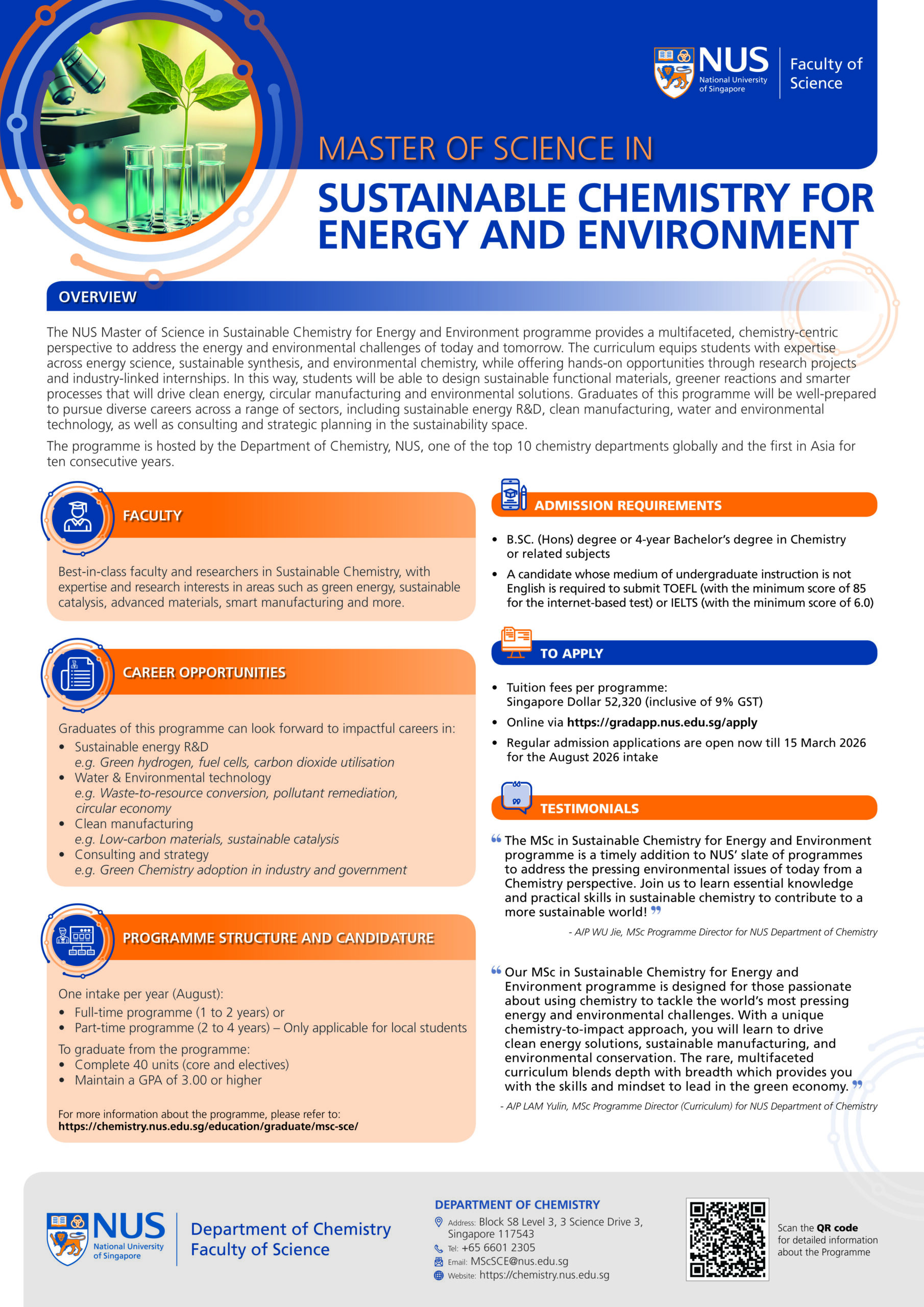
MSc in Sustainable Chemistry for Energy and Environment
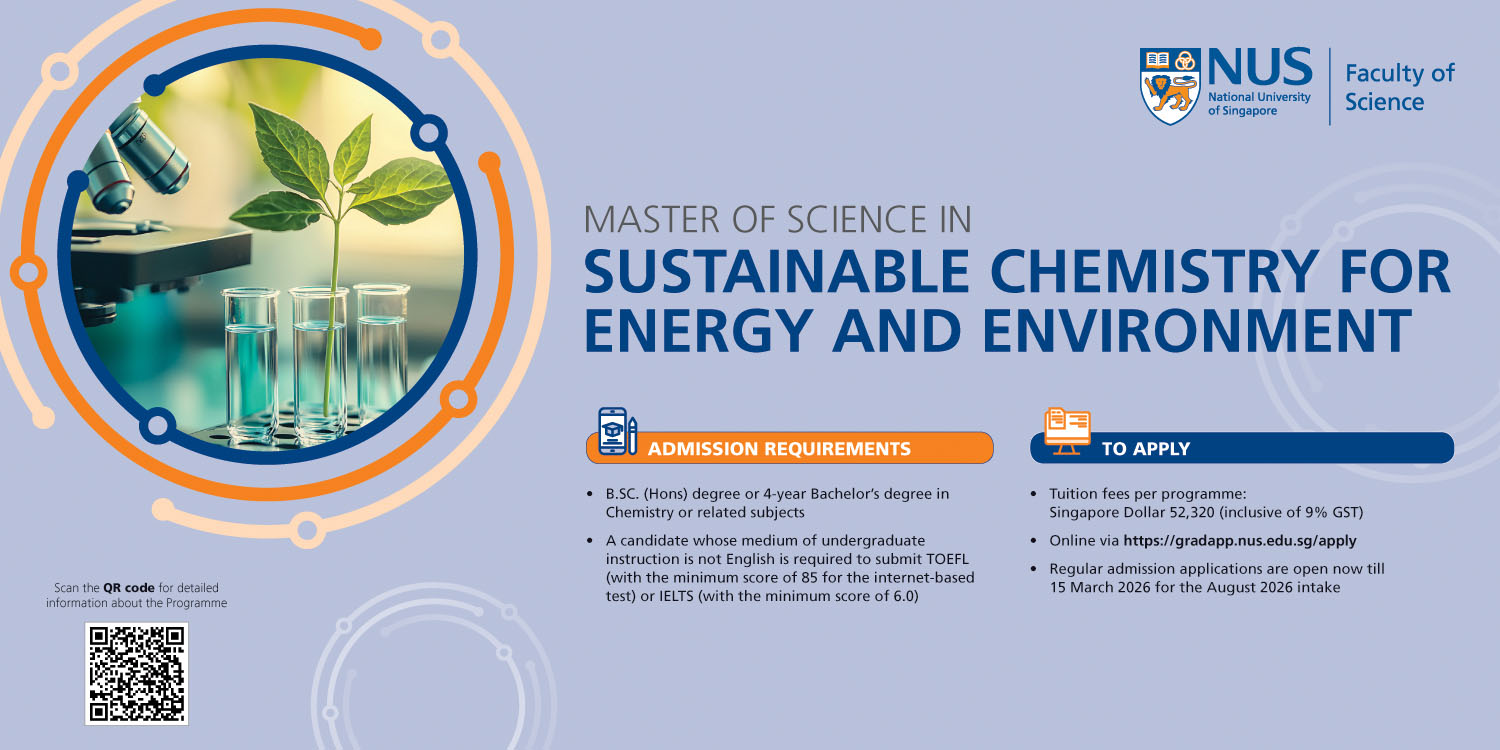
For August 2026 intake: regular admission application deadline has been extended until 30 April 2026.
Why study the Master of Science in Sustainable Chemistry for Energy and Environment?
The global population is projected to grow from 8.2 billion in 2024 to 10.2 billion by 2100, driving greater consumption of natural resources and intensifying the threats of climate change and environmental degradation. Sustainability has therefore emerged as one of the defining challenges of the 21st century, and chemistry plays a critical role in enabling a low-carbon, circular economy through sustainable products, clean energy, and renewable materials. Singapore has made bold commitments to this transition through initiatives such as the Green Plan 2030 and the National Hydrogen Strategy, with its sustainability sector expected to generate 55,000 new jobs by 2030. Beyond Singapore, the chemical industry in emerging markets such as ASEAN, China, and India continues to expand at a steady pace, creating strong global demand for expertise in sustainable chemistry.
The MSc in Sustainable Chemistry for Energy and Environment is designed to address this demand with a chemistry-centric focus on reimagining molecules, reactions, and processes for a sustainable future. Unlike an engineering- or materials-focused curriculum that concentrate on devices, systems, and large-scale infrastructure, this programme empowers graduates to gain chemistry-centric expertise in designing sustainable functional materials, greener reactions and smarter processes that will address today’s and tomorrow’s clean energy, circular manufacturing and environmental needs. The multifaceted curriculum equips students with expertise across energy science, sustainable synthesis, and environmental chemistry, while offering hands-on opportunities through research projects and industry-linked internships. Graduates will be well prepared to pursue diverse careers across a range of sectors, including in sustainable energy R&D, clean manufacturing, water and environmental technology, as well as consulting and strategic planning in the sustainability space.