Graduate Research Programmes
- The Department offers a fully-funded 4-year research programme leading to a degree of PhD in Chemistry. Successful applicants will join a research laboratory under the supervision of a faculty member to pursue research at the leading edge of chemistry. Graduation requirements include completing 6 coursework courses (4 units each) and defending an original research thesis.
- In addition, the department offers a self-financed 2-year research programme leading to a degree of MSc by Research in Chemistry which will also be supervised by a faculty member. Graduation requirement include 3 coursework courses (4 units each) and submission of an original research thesis.
- TOEFL/ IELTS scores and score reports, if required for the PhD and MbR applications, must be valid. For the validity of TOEFL/ IELTS scores and score reports, please refer to: https://www.science.nus.edu.sg/graduates/msc-by-research/faq-for-phd-and-msc-by-research-programmes/.
- Applicants must submit the English-translated versions of required documents (e.g. degree scroll, transcript), as well as their original versions, in their applications. Such translations must be done by the applicant’s university. For Chinese applicants, the English versions of the CHSI or CSCSE verification documents would alternatively be acceptable.
- Other notes: (1) When applying, applicants should note that none of their nominated referees should be the same as their proposed PhD / MSc by Research supervisors. Research Fellows/Post-docs can be referees if the applicant has worked under them directly. PhD students cannot serve as referees. (2) Applicants should upload a scanned copy of the ID page of their passport during application, rather than a scanned copy of other forms of identification (e.g. national ID card). (3) For evidence of financial support (if required by the application system), a bank statement is required, showing a current balance of at least SGD40k for the MSc by Research in Chemistry programme, and a current balance of at least SGD60k for the PhD in Chemistry programme. For the PhD in Chemistry programme, the evidence of financial support should additionally include the applicant’s typed agreement to commit sufficient finances for 4 years of self-funded PhD studies.
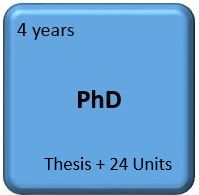
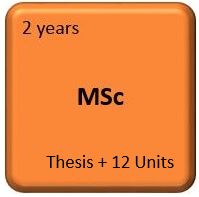
Other programmes offered by the Department for motivated and aspiring undergraduates prior pursuing PhD study at the Department of Chemistry at NUS are:
Graduate Coursework programmes
- The Department of Chemistry offers three graduate coursework programmes leading to the Master of Science (MSc) by Coursework degree.
- MSc in Chemical Sciences
Introduced in AY2021/2022, this flagship programme is designed for chemistry graduates who wish to advance their knowledge and skills in the discipline. Its broad-based curriculum builds a strong scientific foundation across the core areas of chemistry, preparing graduates for senior roles in industry as well as for progression to advanced academic degrees such as the PhD in Chemistry.
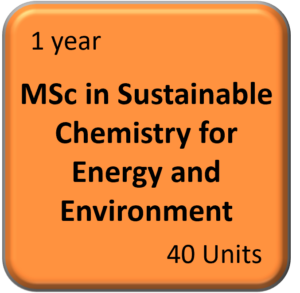
- MSc in Sustainable Chemistry for Energy and Environment
Launching in AY2026/2027, this new programme is tailored for graduates seeking expertise in sustainability-driven chemical innovation. With a focus on designing functional materials, greener reactions, and smarter processes, it equips students to tackle today’s and tomorrow’s challenges in clean energy, circular manufacturing, and environmental protection. The programme provides a multifaceted, chemistry-centric approach to green and sustainable chemistry.
- MSc in Industrial Chemistry (TUM Asia)
In collaboration with TUM Asia, the Department offers a 20-month MSc by Coursework in Industrial Chemistry comprising tailored and elective courses, internships and research projects. This programme is administered by TUM Asia.
- All graduate coursework programmes are self-financed.
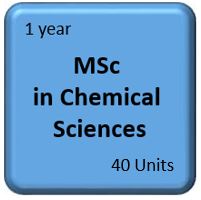
The Regular Admission (MSc in Chemical Sciences) for Aug 2026 intake can be found here!
The Regular Admission (MSc in Sustainable Chemistry for Energy and Environment) for Aug 2026 intake can be found here!
Admission Requirements
- In general, candidates require a good command in English and possess undergraduate degree in chemistry or relevant subjects for admission into our graduate programmes. Please refer to the respective programmes for detailed admission criteria.
- Click here to apply for admission.
Funding and Fees
- PhD students are generally supported by research scholarships offered by the National University of Singapore and other funding organisations. These scholarships include NUS Research Scholarship (open to all), NGS Research Scholarship (open to all) and SINGA (students from non-traditional sources). These scholarships cover monthly living stipend, tuition fees, health insurance, matriculation fees as well as admission to the programme.
- CSC Research Scholarships (students from China) are tenable at NUS Chemistry under a bilateral agreement. Funded CSC scholars will be admitted to the programme and have their fees arising from tuition and matriculation waived. PhD students can also be admitted on a discretionary basis under a self-financed arrangement. Click here for the updated schedule of tuition fees.
Student Organisation
The Department of Chemistry is affiliated to the Chemical Graduate Society. Do read about their enriching learning experience!

